News & Publications

Peer-reviewed research that uses and validates the OpenMNP detection framework — from method development to field application.

Raman spectral evolution
Publication · ES&T

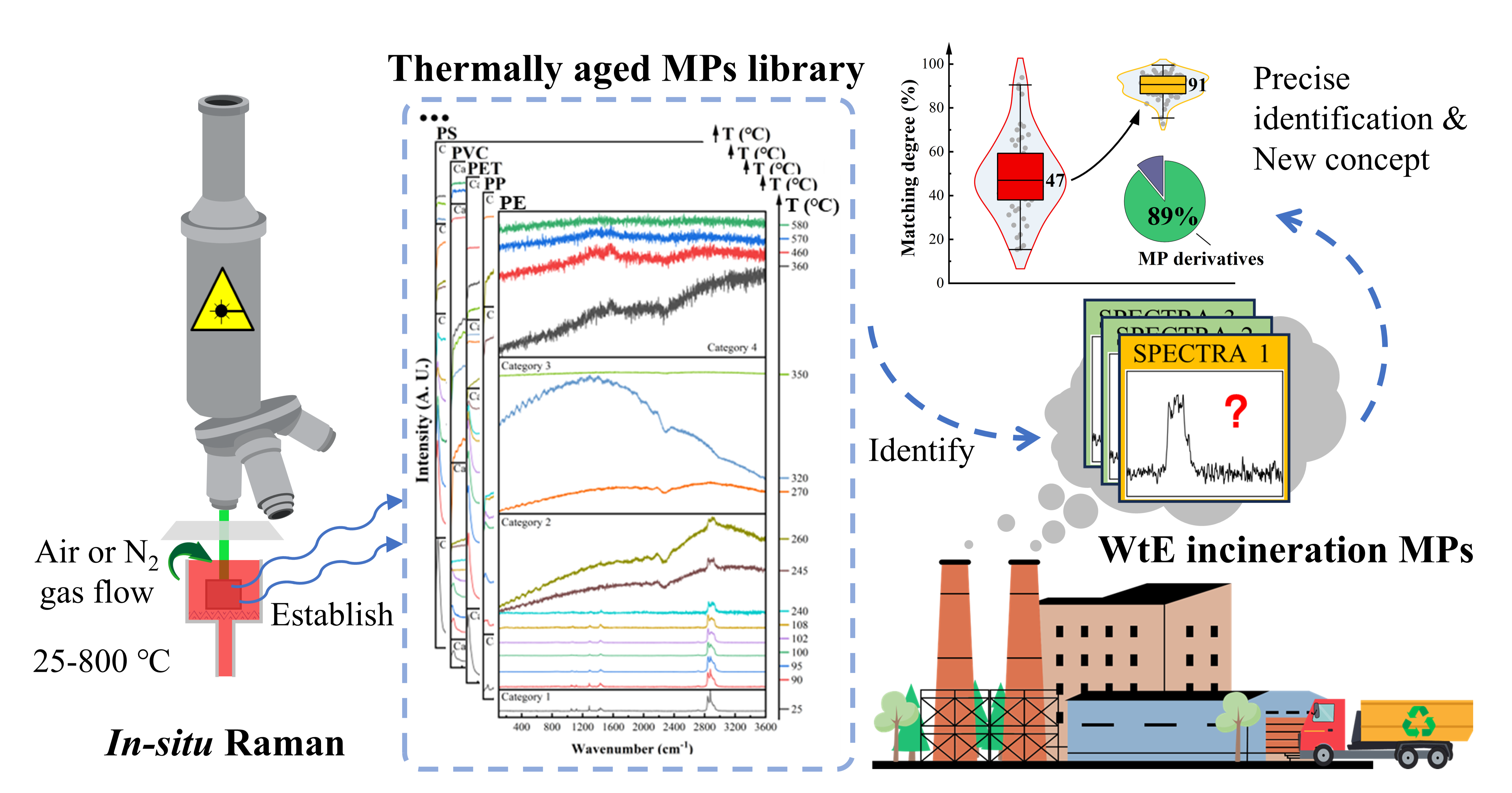
A Resilient In-Situ Raman-Based Framework for Identifying Thermally Aged Microplastics: Validation in Waste-to-Energy Incineration

The foundational paper behind OpenMNP. Using in-situ Raman spectroscopy, we captured real-time spectral evolution of 8 representative plastics during thermal transformation (25°C to 800°C) and built the first comprehensive spectral library for thermally aged microplastics. The open-access identification framework introduced the novel concept of “MP derivative” to refine polymer classification, elevating the median spectral matching degree from 47% to 91% and reducing unassigned spectra by 76%. Applied to flue gas samples from an industrial grate furnace WtE incinerator, over 89% of emitted MPs exhibited spectral signatures consistent with thermally transformed derivatives.

Su T, Gu X, Deng S*, Wang H, Zhu W, Li Z, Li S, Wu F*. Environ. Sci. Technol. 2026.

Read Full Paper
Soil sampling
Application · 环境科学

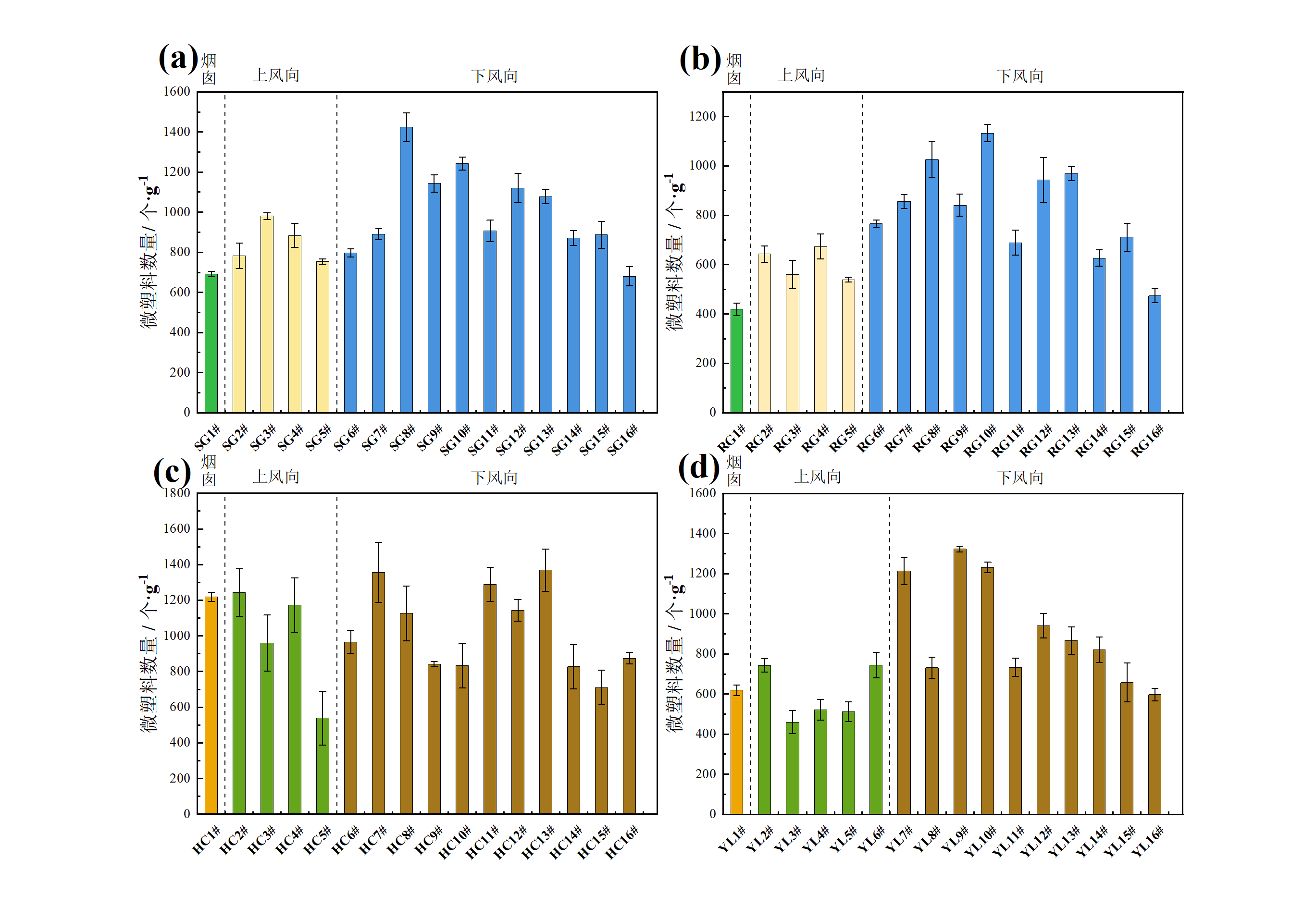
垃圾焚烧电厂周边土壤中微塑料的提取及分布特性

Researchers applied the OpenMNP Raman identification workflow to characterize microplastics (>3 μm) in surface soil surrounding a waste incineration power plant in northern China. After optimizing the extraction procedure for high-organic, alkaline soils, the study combined micro-Raman spectroscopy and Py-GC-MS to reveal particle number abundances of 419–1,133 particles/g (mean: 741 particles/g) and mass abundances of 0.21–3.40 mg/g. Fragment-shaped MPs dominated (59%), with the primary size fraction at 3–10 μm (41%). PP and PE accounted for 61.2% of total polymers. This work validates the OpenMNP method’s real-world environmental applicability and provides essential data for ecological risk assessment.

朱文杰, 顾翔宇, 苏挺, 李卓卿, 王华生, 苑春刚, 邓双*, 李松庚. 环境科学 2026.

Read Full Paper
Mass spectrometry analysis
Application · 分析测试学报

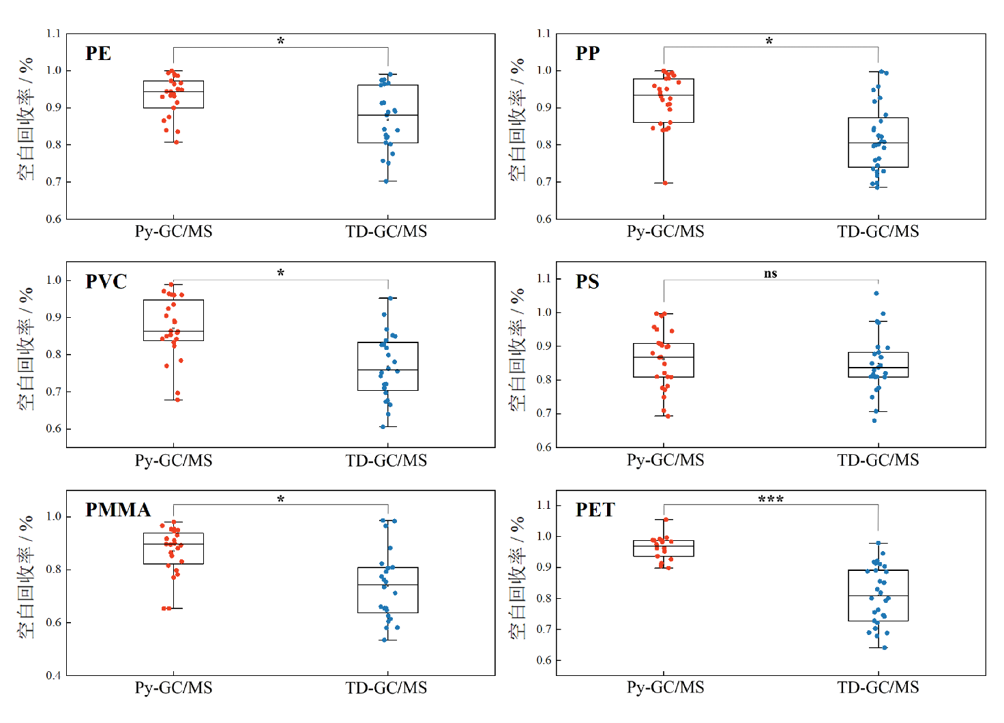
垃圾焚烧厂周边土壤中微塑料质量丰度的 Py/GC-MS 和 TD/GC-MS 比较研究

A systematic comparison of the two mass spectrometry methods offered by OpenMNP — Py/GC-MS and TD/GC-MS — for quantifying six typical microplastics (PE, PP, PS, PET, PMMA, PVC) in soils surrounding waste-to-energy plants. Py/GC-MS demonstrated significantly lower detection limits (8.84×10⁻³–1.58×10⁻¹ μg vs. 2.06×10⁻¹–5.02×10⁻¹ μg), higher recoveries, and better reproducibility. In environmental soil samples, Py/GC-MS yielded higher mass abundances (2.06–2.23 mg/g), providing more reliable quantification in complex matrices and supporting method standardization.

崔欣宇, 顾翔宇, 王华生, 朱文杰, 戴传海, 车平, 李松庚, 邓双*. 分析测试学报 2026. In Press.

In Press
Flue gas sampling
Publication · J. Hazard. Mater. Lett.

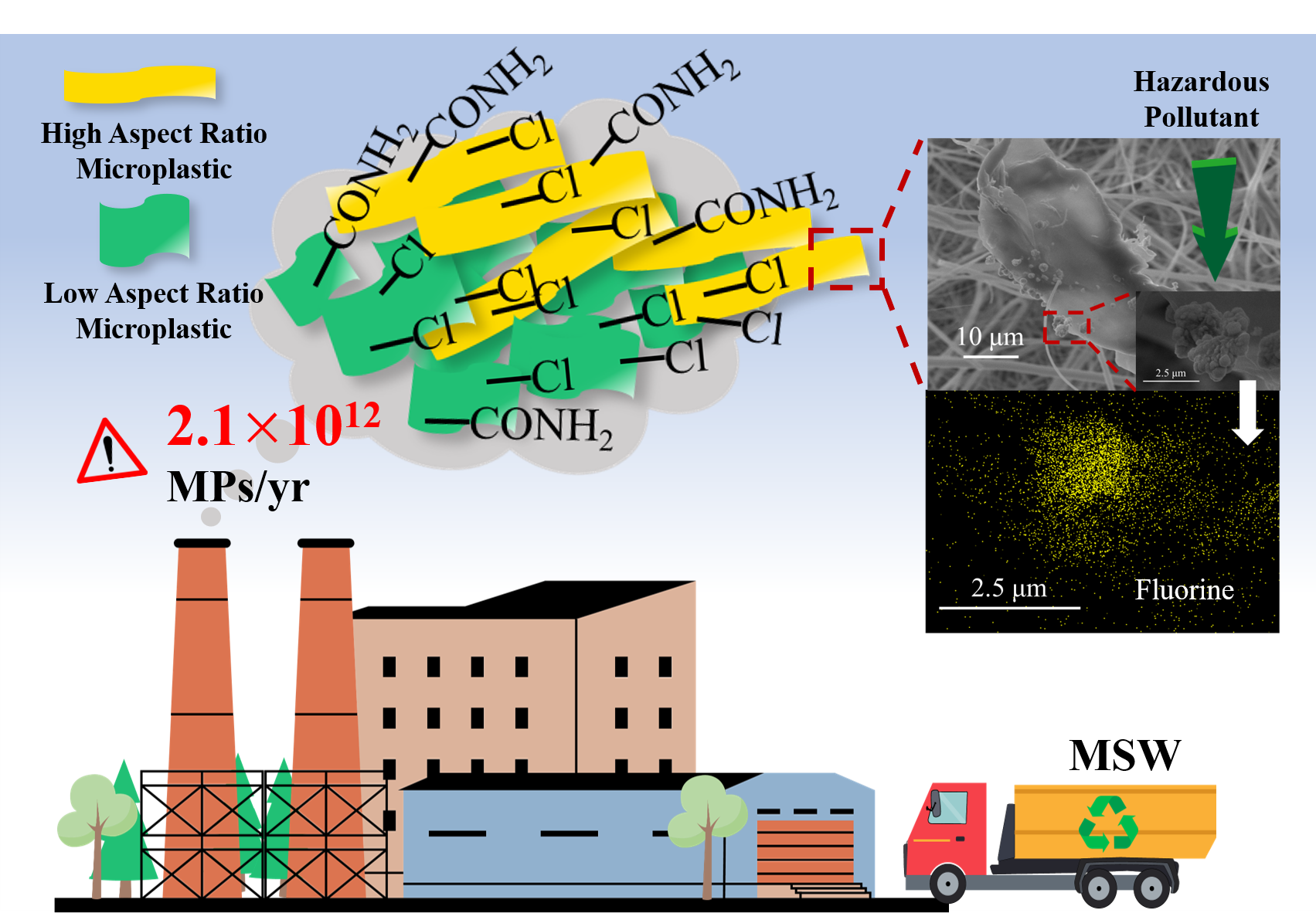
Atmospheric Microplastics Emission from Municipal Solid Waste Incineration Power Plant: Field Evidence and Characterizations

Field investigation of atmospheric microplastic emissions from a circulating fluidized bed incinerator, using Raman spectroscopy with the OpenMNP identification framework. Microplastics in flue gas predominantly ranged from 10–40 μm, with PVC and polyacrylamide as major polymer types. The study estimated atmospheric emissions at 2.1×10¹² particles/yr, identifying MSW incineration as a pivotal contributor to atmospheric microplastics. Air pollution control devices, especially fabric filters, significantly influenced microplastic abundance and chemical structures across different stream locations.

Su T, Wang H, Gu X, Liu S, Xiong Y, Deng S*, Li S*. J. Hazard. Mater. Lett. 2025, 6: 100009.

Read Full Paper

Is your work missing?

If you have used, applied, or cited the OpenMNP method in your research, we would be happy to feature your publication here. Help us showcase the growing impact of harmonized microplastic detection.

Submit Your Publication