An open workflow for identifying environmental microplastics with an expanded aging spectral library.
Introduction
At present, identifying pristine or conventional microplastics is no longer the primary challenge. Rather, considerable challenges lie in the identification of environmentally aged microplastics and in determining whether weathered plastic particles still fall within the definition of microplastics. Spectroscopic techniques are widely used for microplastic identification in environmental samples. Raman spectroscopy was adopted here because it provides higher spatial resolution and is less affected by water interference than conventional infrared-based characterization techniques.
Problem
Why Standard Libraries Are Not Enough
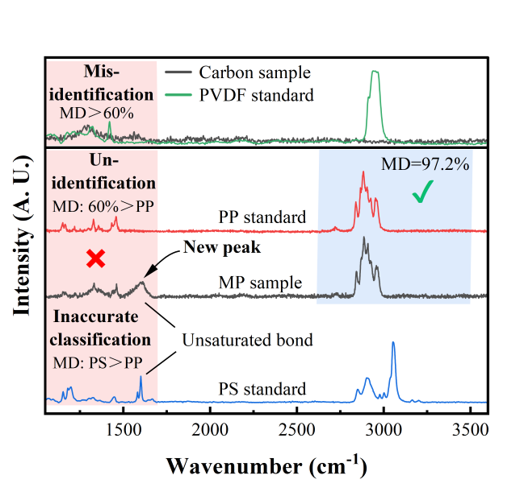
Most spectral identification workflows compare unknown particles against reference spectra collected from pristine polymers. This approach can work well for standard plastic materials, but its reliability drops when samples come from real environmental matrices, where plastics are often aged, chemically transformed, or weathered.
Library
Expanded Aging Spectral Library
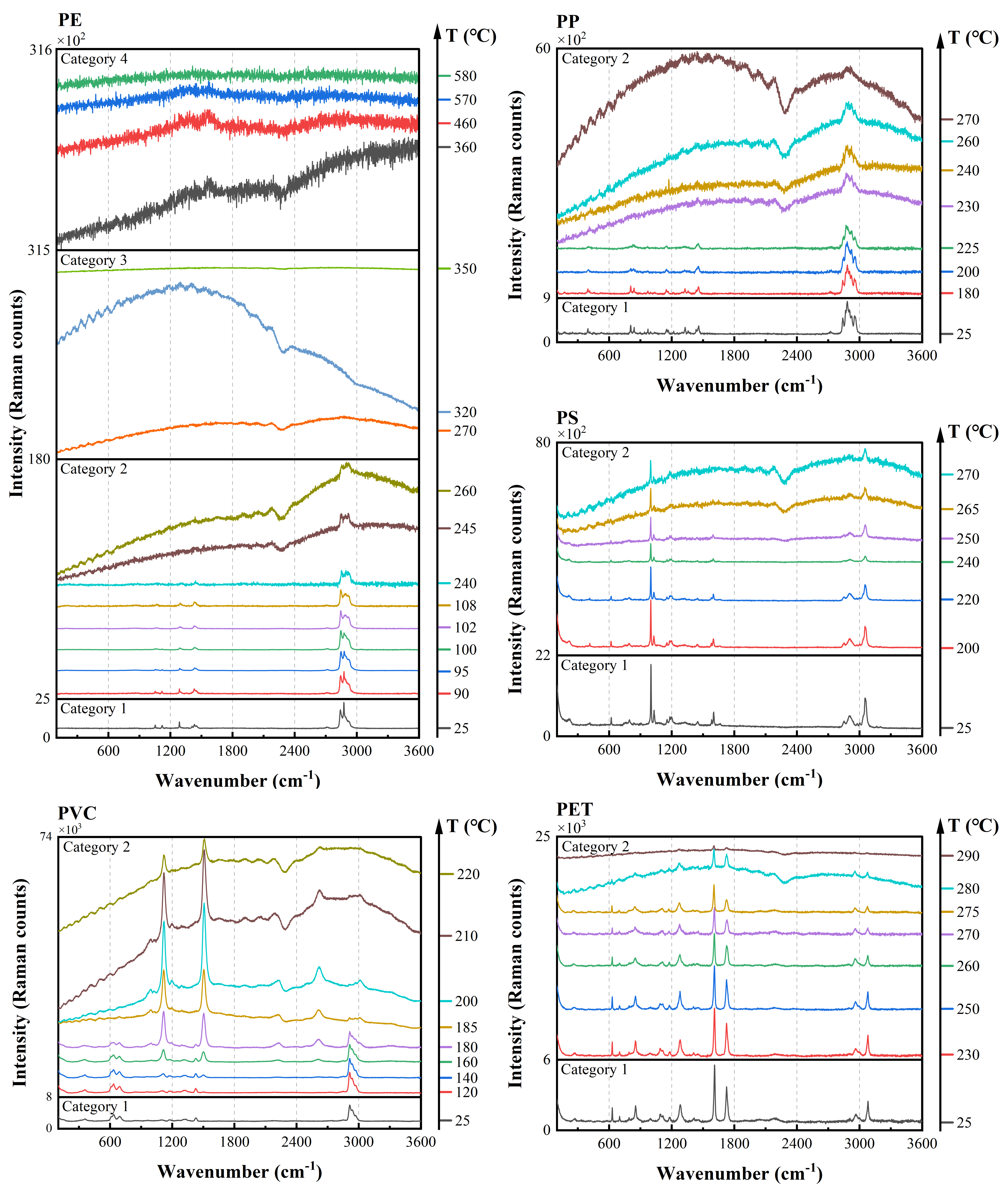
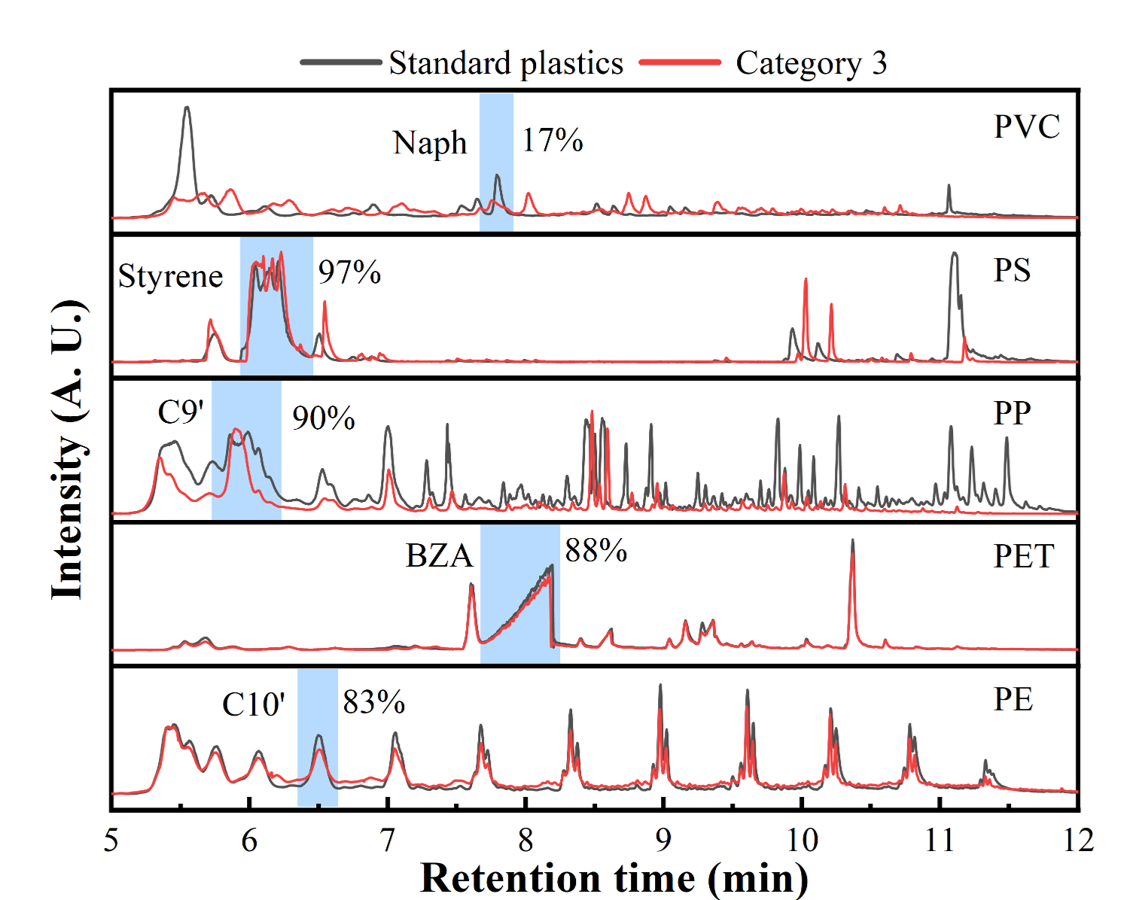
The aging spectral library was obtained through in-situ Raman monitoring of real-time spectral evolution as representative plastics transformed under combustion or pyrolysis conditions.
In-situ Raman spectra with varying temperatures
These evolving spectra not only enriched the spectral library but also provided a foundation for defining the identification window and establishing the concept of “Microplastic Derivatives”.
01
Spectral window
Why 2600-3500 cm-1
In-situ Raman monitoring in the expanded aging library showed that, as plastic spectra evolve, the 2600-3500 cm-1 region preserves key C-H and N-H stretching features more reliably than many conventional fingerprint-region signals, enabling stronger signals, less interference, and more robust identification.
02
A New Concept — Microplastic Derivative
In situ Raman spectroscopy revealed spectra that retained characteristic polymeric C–H stretching vibrations while diverging markedly from pristine reference spectra. These observations led to the introduction of the concept of Microplastic Derivatives: particles that deviate from conventional polymer structures yet retain essential polymeric features.
Long-term environmental persistence
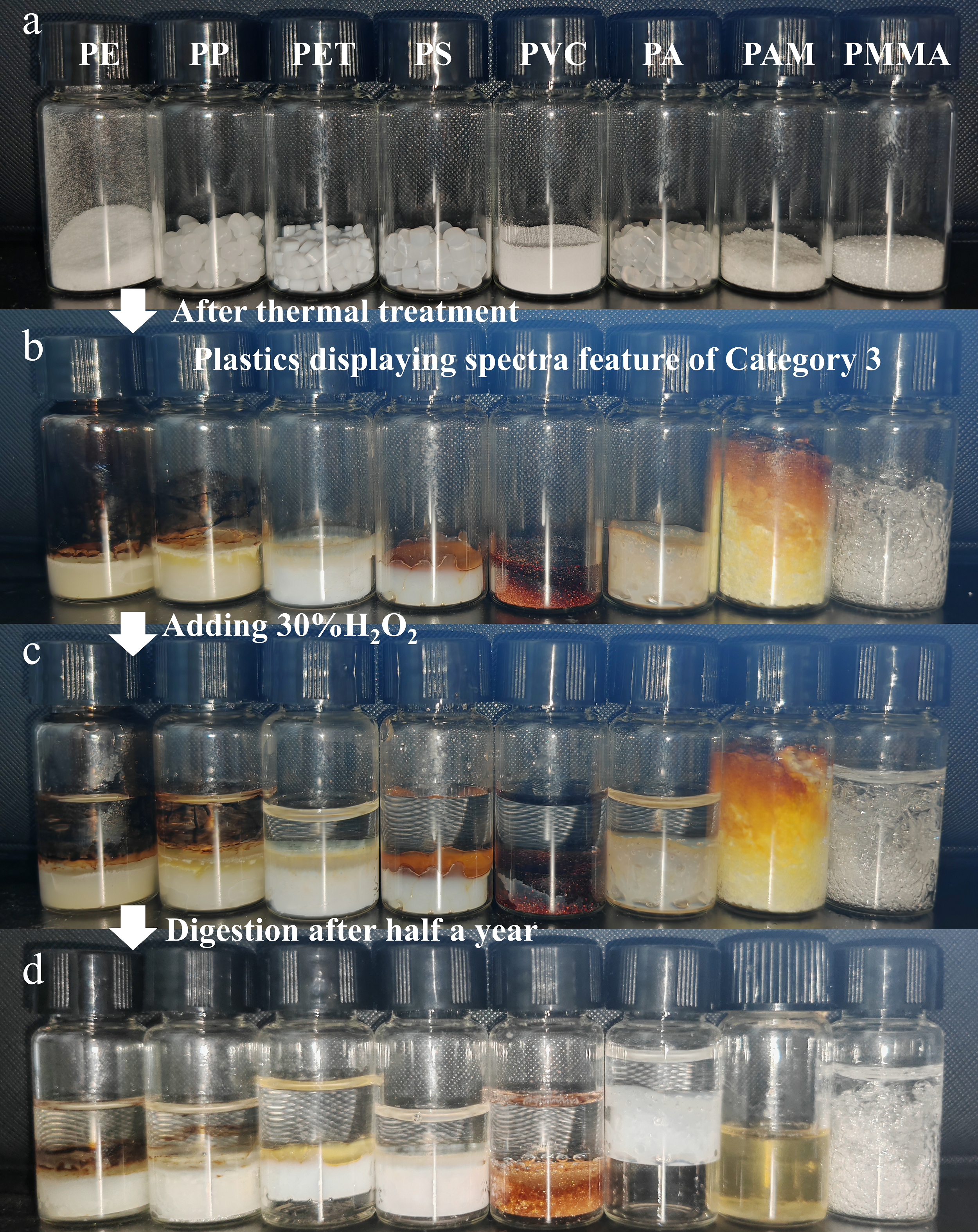
Oxidation-resistance observations indicate that aged particles can retain persistent plastic characteristics after thermal transformation.
Plastic mechanical behavior
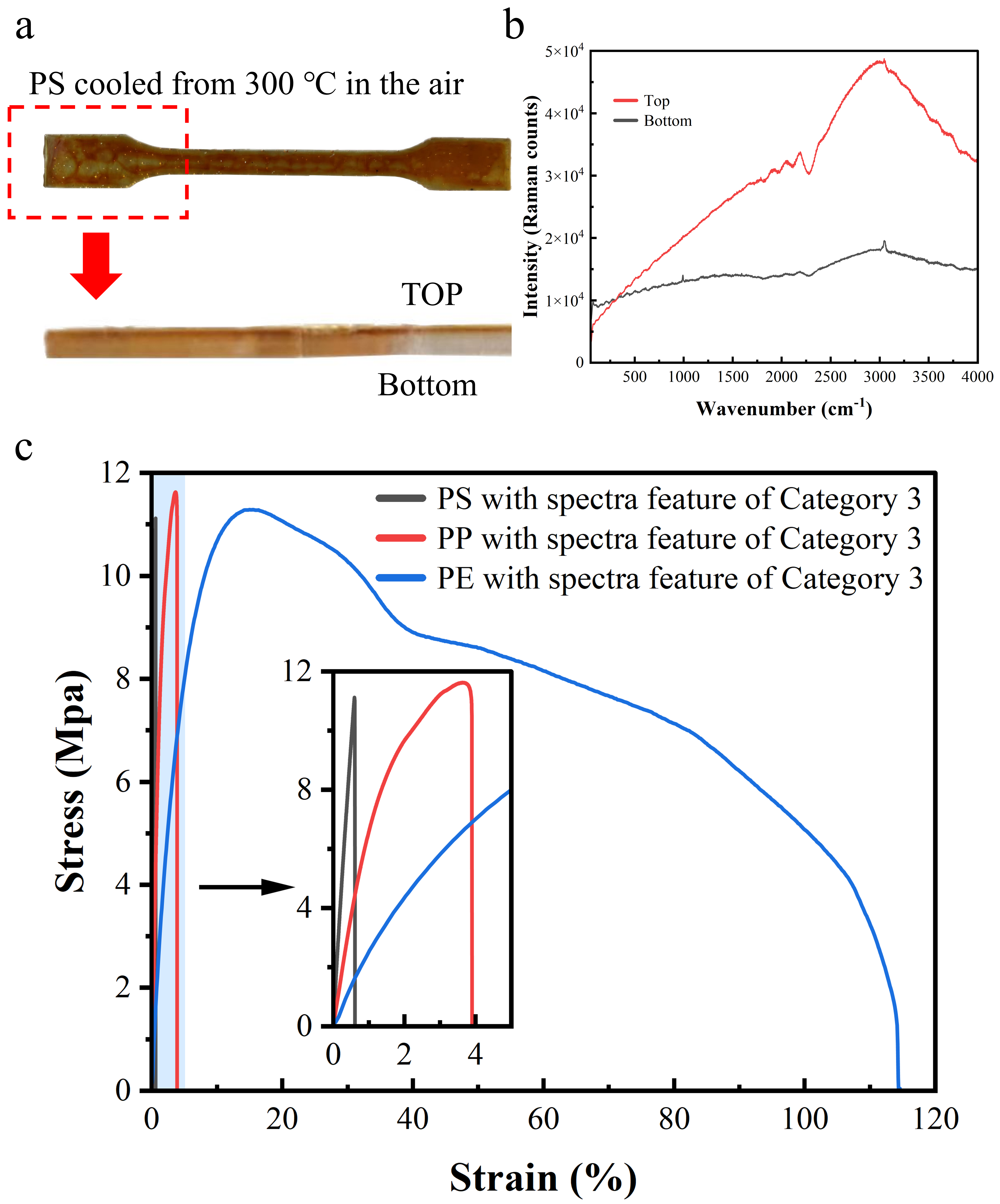
Tensile testing shows mechanical responses consistent with plastic materials, supporting their classification as altered microplastics rather than unrelated particles.
Characteristic polymer structure
Mass spectrometric evidence confirms characteristic polymer structures, linking thermally altered spectra back to polymer-derived material.
Important: Because Raman spectroscopy is surface-sensitive, Microplastic Derivative should be understood as an operational category rather than a compositionally pure category.
Workflow
How Raman Identify Works
The web workflow mirrors the scientific framework while keeping each decision visible to the user.
Step 1
Upload Spectrum
Upload a two-column Raman spectrum with wavenumber in cm-1 and intensity.
Step 2
Describe Sample
Select the sample category and aging type to help OpenMNP evaluate method application scope.
Step 3
Correct Baseline
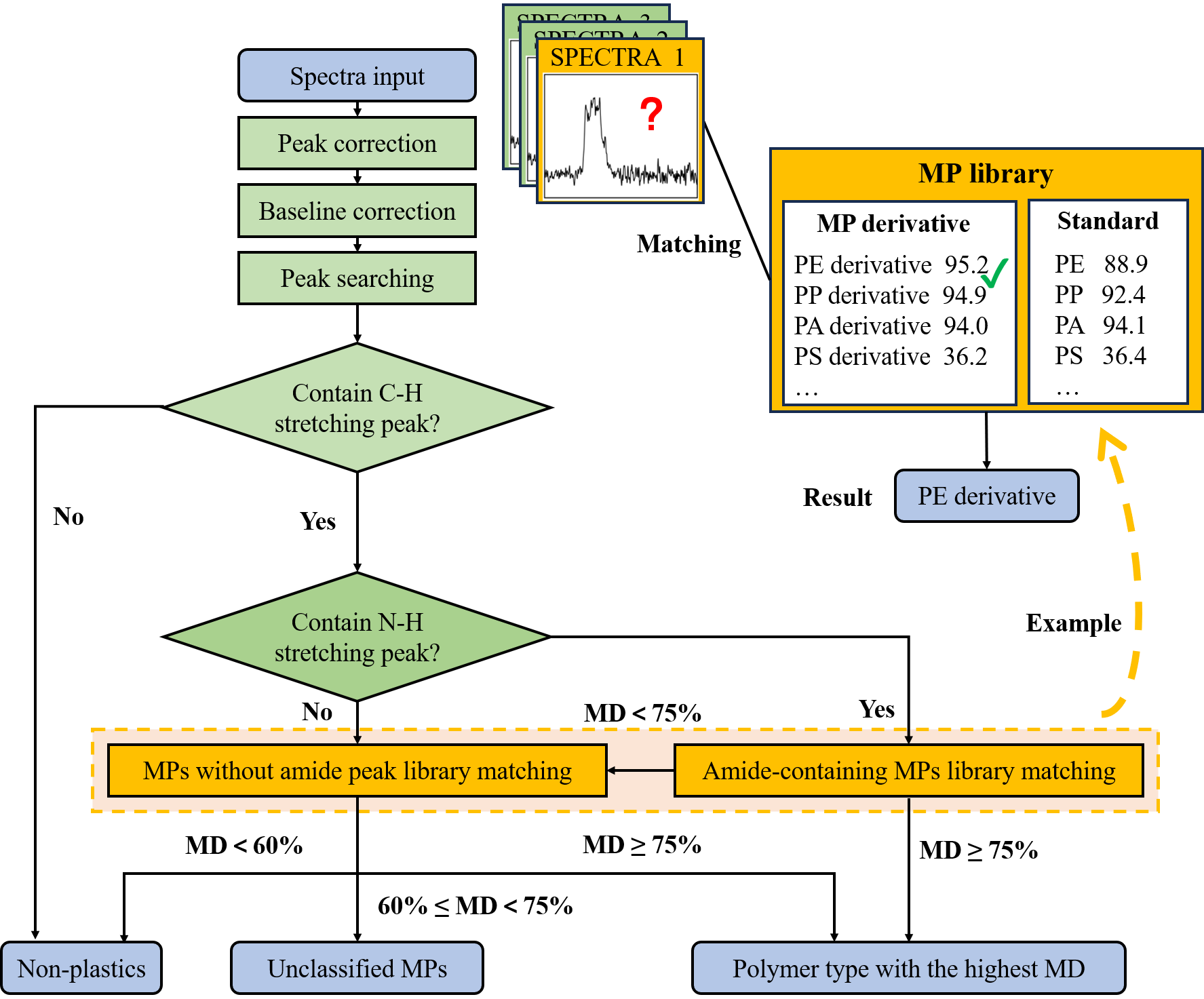
Add anchor points to adjust the baseline or skip correction. Matching uses only 2600-3500 cm-1.
Step 4
Check Amide Signal
The system checks 3200-3500 cm-1 for possible N-H contribution and lets users confirm or override the library route.
Step 5
Run Pearson Matching
The uploaded spectrum is interpolated onto the same grid and matched against the expanded aging library.
Step 6
Review and Save
OpenMNP reports the result, matching degree, top hits, standard-only comparison, and optional feedback.
Matching
Pearson Matching and Thresholds
Every uploaded spectrum is interpolated onto the same wavenumber grid before matching. Similarity is reported as matching degree, calculated from Pearson correlation and expressed as a percentage.
≥ 75%Polymer type classified
60-75%Unclassified MP
< 60%Non-plastic
Validation in waste incineration
Full Library vs Standard-Only Library
To make the advantage of the expanded library visible, OpenMNP also reports a standard-only comparison. This shows how the result would look if only conventional pristine-polymer spectra were used.
47%Median matching degree with standard references
91%Median matching degree with the expanded derivative library
76%Reduction in unassigned spectra
Instrument Information
The in-situ aging library was acquired with a confocal micro-Raman system coupled to a controlled heating stage (CCR1000 catalytic cell reactor, Linkam).
Laser sourceA 532 nm laser (KIT-532-100-HRev, Oxxius, France; 100 mW) was used as the excitation source. Compared with other commonly used excitation wavelengths, the 532 nm laser is more widely adopted in environmental microplastic studies and produces stronger Raman scattering intensity, thereby facilitating the detection of subtle spectral features and improving the characterization of small microplastic particles.
Transparency
Scientific Foundation and Open Logic
OpenMNP does not hide preprocessing, spectral regions, thresholds, or matching logic. The method is documented in the ES&T publication and supported by open code so that researchers can inspect, reproduce, and improve the workflow.